How to Choose a Brick Slip Installer
HOW TO CHOOSE A
BRICK SLIP INSTALLER
A practical guide to finding a skilled professional and avoiding poor workmanship
━━━━━━━━━━━━━━━━━━━━━━━━━━━━━━━━━━
Brick slips can transform a fireplace, feature wall, extension or external elevation. When installed correctly, they create the appearance of traditional brickwork without the depth and weight of a full masonry wall. However, the final result depends heavily on the installer.
Brick slip installation requires accurate setting out, suitable materials, careful cutting, proper corner details and skilled pointing. Poor installation can leave uneven courses, inconsistent joints, visible adhesive and a finish that looks more like wall tiling than genuine brickwork.
The most important rule
Choose someone who can show genuine brick slip work, explain the preparation and materials, and produce a detailed written quotation. The cheapest price is rarely the safest choice for highly visible decorative work.
1. Look for Specific Brick Slip Experience
Not every tiler, general builder or bricklayer has experience installing brick slips. The work combines aspects of masonry and tiling, but the finished surface should still read visually as proper brickwork.
Brick bonds and course heights
Consistent mortar-joint widths
Corner slips and reveals
Accurate cutting around openings
Brick colour variation
Pointing mortar and joint profiles
An installer with bricklaying or masonry experience will usually understand how the bond should continue around corners and how the pointing should be finished to resemble traditional brickwork.
2. Ask to See Previous Work
A professional installer should be able to show clear photographs of completed projects. Do not only look at the wall from a distance. Close-up details reveal much more about workmanship.
Straight and level courses
Consistent joint widths
Neat cuts around sockets, doors and fireplaces
Properly alternated corner slips
Clean brick faces without adhesive or mortar stains
Even distribution of colours and textures
What good photographs should show
Ask for wide photographs and close-ups. A large wall may look impressive from across the room while still containing poor cuts, untidy corners or inconsistent pointing.
3. Check the Corner Details
Corners are one of the clearest signs of professional brick slip installation. Purpose-made corner slips should normally wrap around external corners and returns, with the long and short legs alternating to follow the selected bond.
Avoid exposed cut edges at corners
Check that courses align on both elevations
Look for consistent joints around returns
Make sure the backing surface is not visible
4. Ask How the Wall Will Be Prepared
The installer should inspect the background before starting. The wall must be strong enough for the weight of the slips, adhesive and pointing mortar. Loose paint, weak plaster, wallpaper, dust and contamination must be dealt with first.
Removal of loose coatings
Repairs to damaged plaster or render
Levelling uneven walls
Primer or bonding agent
Suitable backing board
Mesh or mechanical fixings for certain external systems
Warning sign
Be cautious if someone intends to install directly over a loose, dusty or unsuitable surface without explaining how it will be prepared.
5. Make Sure the Correct Adhesive Is Used
Brick slips are heavier and more demanding than many ordinary wall tiles. The adhesive must suit the slip product, the background, the weight, and whether the installation is internal, external or exposed to heat.
Internal or external use
Fireplace or high-temperature use
Porous or non-porous backgrounds
Heavy slips and handmade products
Weather and moisture exposure
A professional installer should be able to name the proposed primer and adhesive and explain why the system is suitable.
6. Discuss the Brick Bond
The bond determines how the slips are arranged. Stretcher bond is usually the simplest and most economical, while Flemish bond, English bond, garden wall bonds and herringbone require more planning and cutting.
Stretcher bond
Flemish bond
English bond
Stack bond
Herringbone
English or Flemish garden wall bond
The installer should plan how the bond continues around corners, above openings and through reveals before adhesive is applied.
7. Ask How the Courses Will Be Set Out
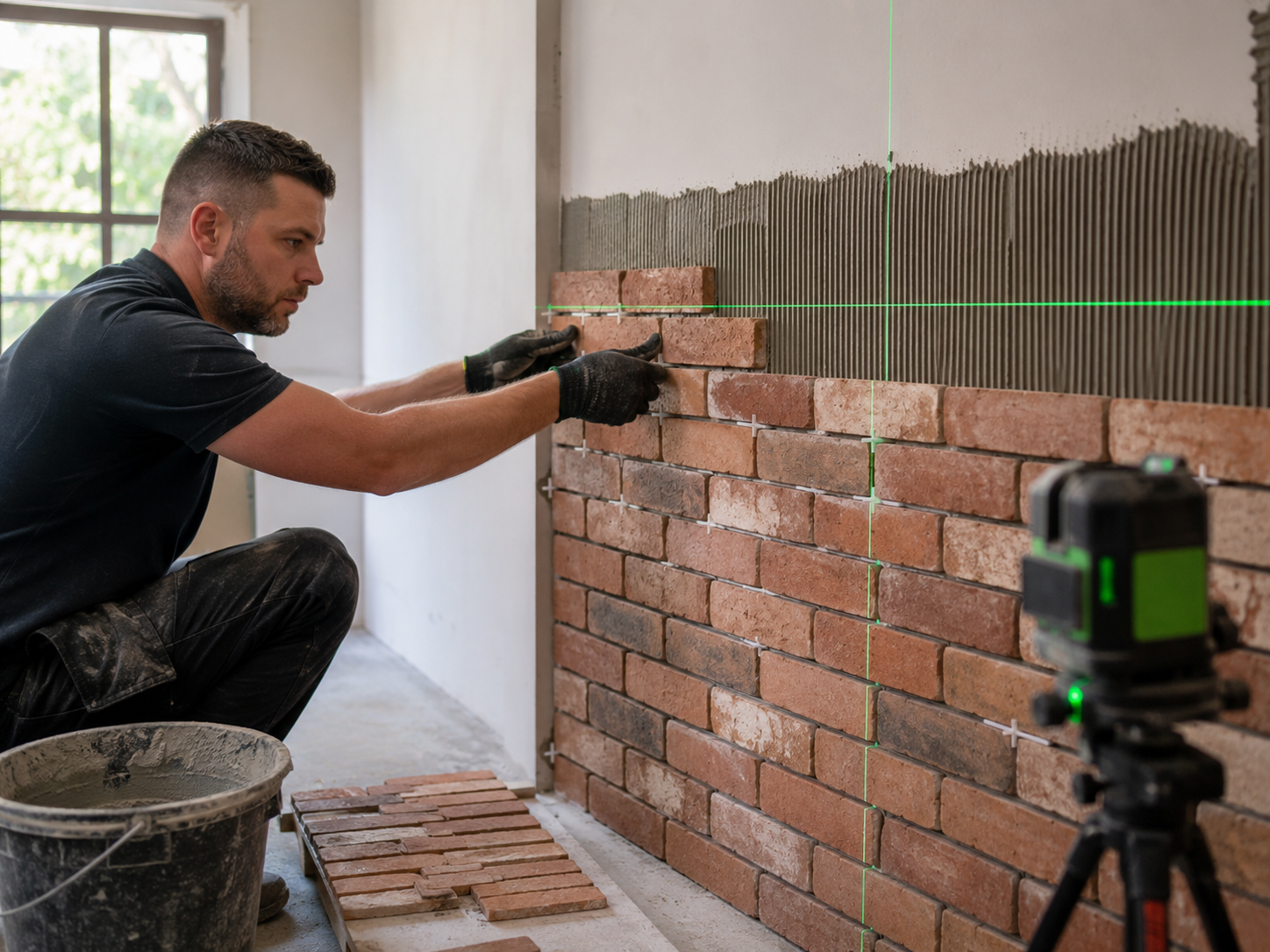
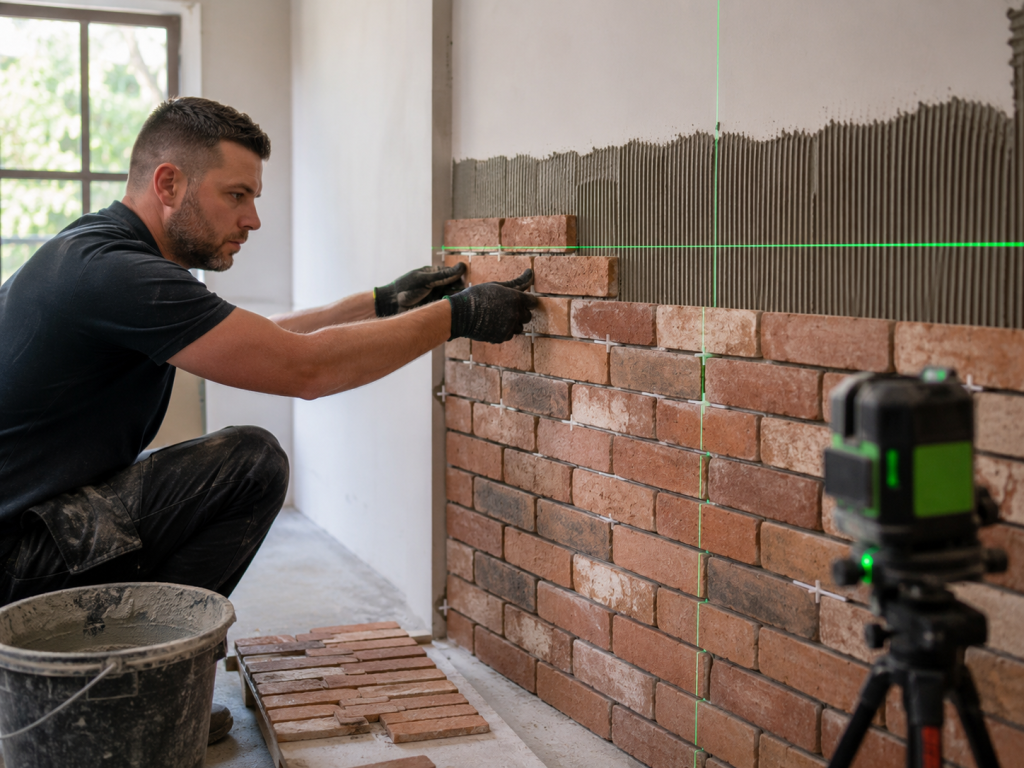
The installer should establish level course lines using a laser or datum. Floors, ceilings and fireplace openings are not always level, so simply following them can produce visibly sloping brickwork.
Slip height plus joint width
Number of full courses
Position of the first and final courses
Location of cuts
Alignment around corners and openings
8. Check How Colours Will Be Mixed
Brick slips often vary naturally in colour and texture. The installer should draw from several boxes while working so the variation is distributed across the wall. Using one box at a time can create obvious bands or patches.
9. Ask About Cutting and Dust Control
Accurate cuts may be required around sockets, shelves, pipework, windows, doors and fireplaces. Cutting can create significant dust, especially indoors.
Appropriate wet or dry cutting equipment
Dust extraction or outdoor cutting
Protection of floors and furniture
Temporary screening where needed
Safe handling and personal protective equipment
10. Check the Pointing Standard
Pointing has a major effect on the finished appearance. The mortar colour, joint depth and profile can make a well-installed wall look traditional, modern or reclaimed.
Bucket-handle joints
Flush joints
Recessed joints
Weather-struck joints
Brushed or traditional irregular joints
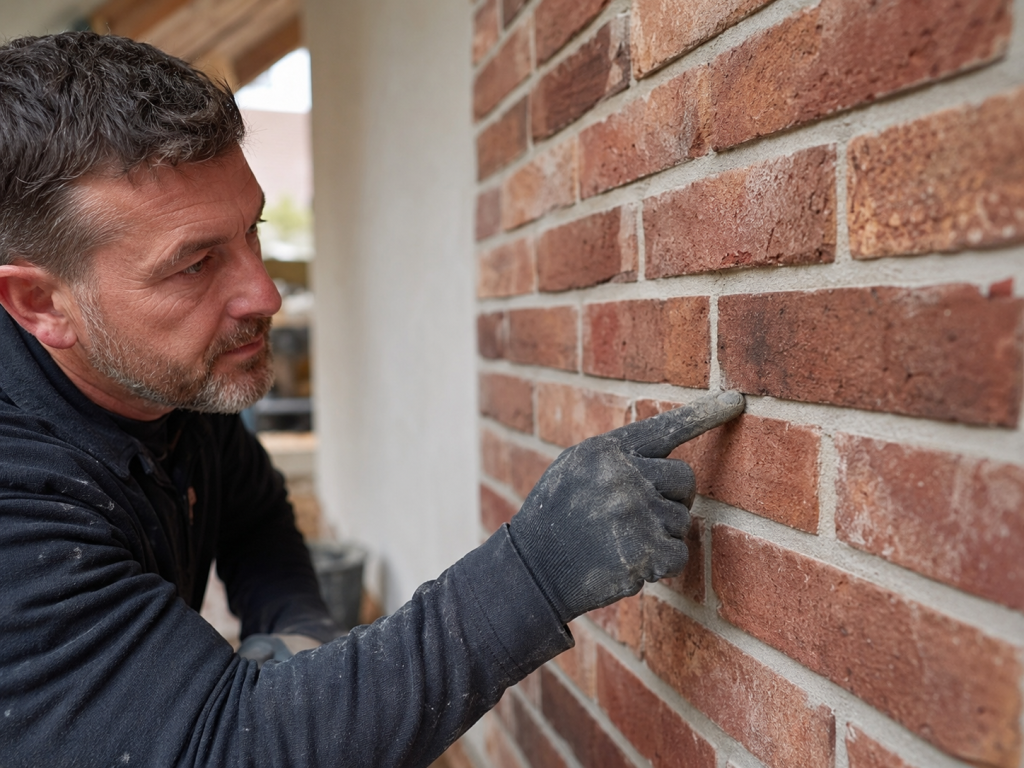
Inspect the pointing
Joints should be fully filled, consistent in depth, cleanly tooled and free from holes or mortar smears. Ask to see close-up examples.
11. Be Careful With Very Cheap Quotes
A very low price may mean insufficient allowance for preparation, setting out, cutting, corner slips, pointing, protection and cleaning. Poor brick slip work is difficult to disguise and often has to be removed completely before it can be corrected.
12. Make Sure the Quotation Is Detailed
The written quotation should identify what is included and who is supplying the slips.
Surface preparation and primer
Adhesive or backing system
Installation and cutting
Corner slips and special pieces
Pointing mortar and joint profile
Protection, access and cleaning
Waste removal
VAT where applicable
13. Check Insurance and Professionalism
Ask whether the installer has appropriate public liability insurance. Also consider whether they communicate clearly, attend when agreed, answer technical questions and provide realistic timescales.
Fireplace Installations
Fireplace projects require additional care. The backing board, adhesive, pointing mortar and appliance clearances must all be suitable for the temperatures involved. Ordinary plasterboard and standard tile adhesive may not be appropriate near a stove or high-temperature appliance.
Fire safety
The installation must follow the appliance manufacturer’s clearance requirements and use appropriate non-combustible or heat-resistant materials where required.
External Brick Slip Installations
External systems must withstand rain, frost, wind, thermal movement and changes in temperature. A compatible manufacturer-approved system is preferable to a mixture of unrelated boards, primers, adhesives and mortars. Movement joints and drainage details must also be considered.
Questions to Ask Before Appointing an Installer
How many brick slip projects have you completed?
Can I see photographs of similar work?
How will the existing wall be prepared?
Which primer and adhesive will be used?
How will the courses and bond be set out?
How will corners and reveals be finished?
Will slips be mixed from several boxes?
What pointing mortar and joint finish are included?
How will cutting dust be controlled?
Do you have public liability insurance?
Signs of a Good Brick Slip Installer
Inspects the wall before starting
Explains the preparation and materials
Sets out the bond carefully
Keeps courses level and joints consistent
Produces convincing corners and clean cuts
Mixes colours across the wall
Points the joints neatly
Protects the property and leaves the area tidy
Provides a clear written quotation
Professional Brick Slip Installation
Beds, Bucks and Herts Brickwork provides professional brick slip installation for fireplaces, feature walls, extensions, garden rooms, external elevations, commercial interiors and bespoke decorative projects.
We work across Bedfordshire, Buckinghamshire, Hertfordshire and North London, including Bedford, Luton, Milton Keynes, Aylesbury, Hitchin, Stevenage, St Albans, Hemel Hempstead and surrounding areas.
REQUEST A FREE BRICK SLIP INSTALLATION QUOTE
Send photographs, approximate measurements, a link to the selected slips and details of any corners, openings or fireplace requirements.
Beds, Bucks and Herts Brickwork
Professional brick slip installation across Beds, Bucks, Herts and North London